Substance Addiction Rehabilitation in Tamil Nadu: Why Choose Lotus Life Center, Coimbatore?
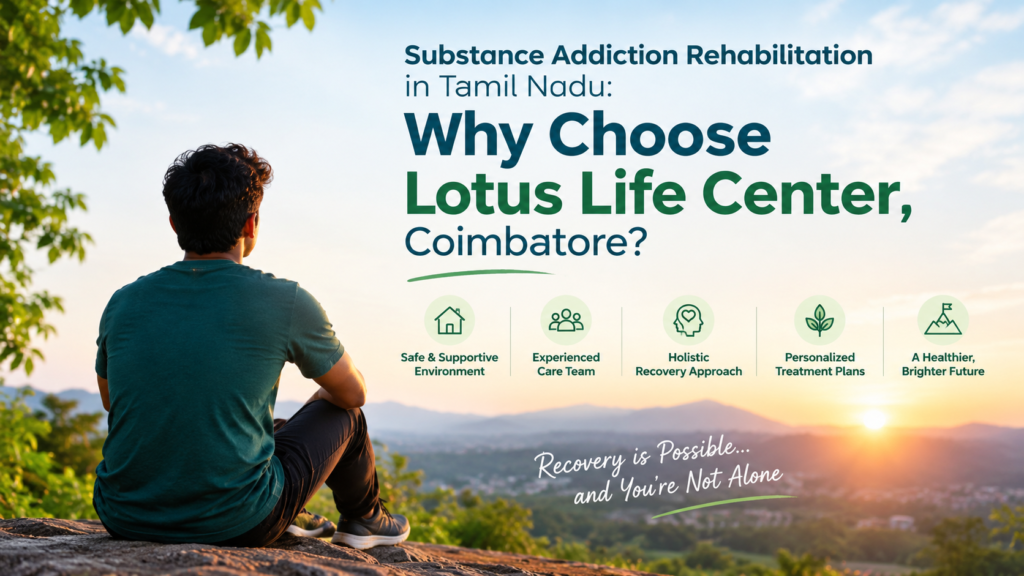
Substance Addiction Rehabilitation in Tamil Nadu: Why Choose Lotus Life Center, Coimbatore?
By
Dr. G. Om Prakasham
M.B.B.S, MS, MCh, FACS (Singapore)
Chairman – Lotus Wellness
Heart Surgeon | Mental Health Advocate | Wellness Visionary
A Complete Guide to Drug Addiction Treatment, Alcohol Rehabilitation, Recovery Support and Family Guidance
Substance addiction can affect anyone, regardless of age, education, profession, financial background or family circumstances. What may begin as occasional alcohol consumption, experimentation with drugs or an attempt to manage stress can gradually become difficult to control. Over time, substance use may affect physical health, emotional well-being, relationships, work, education and a person’s confidence in the future.
For many families, recognising the problem is only the beginning. The next challenge is finding the right treatment centre, understanding the available rehabilitation options and supporting their loved one without blame or shame.
For individuals and families searching online for substance addiction rehabilitation in Tamil Nadu, drug de-addiction centres in Coimbatore, alcohol addiction treatment in Tamil Nadu or a supportive rehabilitation environment away from everyday pressures, Lotus Life Center in Coimbatore is one option to explore.
Located in Pollachi, in the Coimbatore region of Tamil Nadu, Lotus Life Center presents its approach to addiction recovery around individualised care, privacy, emotional well-being and attention to the underlying factors associated with substance use. Its published treatment information describes a combination of therapeutic approaches, individual sessions and group therapy.
This guide explains what substance addiction treatment involves, why some families consider Coimbatore for rehabilitation, what individuals can explore at Lotus Life Center and how to make an informed decision before beginning treatment.
What Is Substance Addiction, and When Should Someone Seek Rehabilitation?
Substance addiction, often discussed clinically as substance use disorder, refers to a pattern of alcohol or drug use that becomes difficult to control despite harmful consequences. A person may continue using a substance even when it affects their health, relationships, responsibilities or personal goals.
Addiction is not simply a lack of willpower. Biological, psychological, social and environmental factors can contribute to the development and continuation of problematic substance use.
Common warning signs may include:
– Repeatedly trying to reduce or stop substance use without lasting success.
– Experiencing strong cravings or spending significant time obtaining or using a substance.
– Neglecting family, professional or educational responsibilities.
– Continuing substance use despite relationship problems or health concerns.
– Needing increasing amounts to experience the same effect.
– Experiencing withdrawal symptoms when reducing or stopping certain substances.
– Returning to substance use after previous attempts to stop.
Not everyone experiences every sign, and the severity of the problem varies from person to person.
If substance use is affecting daily life, seeking a professional assessment can help clarify the next steps. Treatment may involve outpatient counselling, medical care, structured rehabilitation or a combination of services, depending on the individual’s needs.
Early support can make it easier to address concerns before they become more complicated. However, it is never too late to ask for help.
Why Is Lotus Life Center in Coimbatore an Option for Addiction Rehabilitation?
Choosing a rehabilitation centre is a personal decision. Families often look beyond the centre’s location and consider its treatment philosophy, professional support, privacy arrangements, daily routine and approach to long-term recovery.
Lotus Life Center publishes information about its addiction treatment programmes, including individualised care, privacy, therapeutic support and attention to the factors associated with substance use. These are useful starting points for families evaluating whether its approach is appropriate for their circumstances.
1. Individualised Addiction Treatment
No two people’s experiences with addiction are exactly alike.
One person may struggle with alcohol use following prolonged stress. Another may experience difficulties associated with drug use, family conflict, emotional distress or social influences. Some individuals may have more than one substance-related concern, while others may need assessment for co-occurring mental health conditions.
A treatment plan should reflect these differences rather than assume that one programme will work equally well for everyone.
Lotus Life Center describes its programmes as individualised. Prospective clients and families can ask how the initial assessment is conducted, how personal goals are established, which therapies are offered and how progress is reviewed.
The most suitable plan is one that responds to a person’s clinical needs, circumstances and recovery goals.
2. Attention to Underlying Factors
Stopping or reducing substance use is an important part of recovery, but understanding the reasons behind the pattern can also matter.
Stress, unresolved emotional difficulties, loneliness, social pressure, trauma and unhealthy coping habits may contribute to substance use for some individuals. These factors are not the same for everyone, and they should be explored sensitively rather than assumed.
Lotus Life Center’s published information emphasises exploring underlying factors associated with addiction. Families can ask how this principle is translated into practice through counselling, therapeutic activities and individual sessions.
Understanding personal triggers may help individuals recognise high-risk situations, develop healthier coping strategies and make more informed decisions during recovery.
3. Individual and Group Therapeutic Support
Individual counselling gives a person an opportunity to discuss private concerns, identify patterns and work towards personal goals in a more focused setting.
Group therapy can provide opportunities to learn from others, practise communication and understand that recovery challenges are not experienced in isolation.
Lotus Life Center’s published drug rehabilitation information describes individual therapy and group therapy as components of its programme. The centre lists approximately 12–16 hours of individual therapy and 60–80 hours of group therapy per month.
Families should confirm the current programme schedule, the nature of each session, staff qualifications and how therapeutic activities are matched to individual needs before admission.
The important consideration is not simply the number of therapy hours, but whether the programme is appropriate, professionally delivered and responsive to the individual.
4. Privacy, Dignity and Respect
Fear of judgement can prevent people from seeking addiction treatment. Some worry about how relatives, colleagues, friends or members of their community might respond if they learn about their situation.
A respectful rehabilitation environment should protect confidentiality, maintain personal dignity and encourage honest communication.
Lotus Life Center highlights privacy and discretion in its published description of the centre. Prospective clients should discuss how personal information is handled, who can access treatment records, how family communication is managed and what confidentiality limits apply.
Recovery should not require a person to surrender their identity or self-respect. People deserve to be treated as individuals with strengths, responsibilities, relationships and goals beyond their substance use.
5. A Structured Environment Away from Everyday Pressures
For some individuals, stepping away from familiar surroundings can make it easier to focus on treatment. Regular routines, therapeutic activities and distance from certain social triggers may provide useful structure.
Lotus Life Center describes its Pollachi setting as a calm and private environment intended to support personal well-being.
However, a change of location alone does not produce recovery. The quality of clinical assessment, appropriate treatment, professional supervision and continuing support remain essential.
Families should confirm whether residential treatment is suitable, what supervision is available, how medical concerns are handled and what arrangements exist for emergencies.
Why Do People From Different Parts of India Consider Coimbatore for Rehabilitation?
When families search for rehabilitation, they do not always limit themselves to their own city or state. Some compare centres in their home region with options in other parts of India.
Coimbatore and the surrounding Pollachi region may be worth considering for people seeking a rehabilitation setting in Tamil Nadu, particularly when privacy, distance from familiar triggers and a structured environment are important considerations.
There are several reasons a family might explore this location.
A Change in Environment
For individuals whose substance use is closely connected with particular social circles, routines or places, a temporary change in environment may help create space for treatment.
This should be considered alongside professional assessment. Travel is not suitable for everyone, particularly when a person requires urgent medical attention or medically supervised withdrawal management.
An Opportunity to Focus on Recovery
A planned rehabilitation stay can create time to concentrate on therapeutic work, daily routines and personal goals without the same level of everyday distraction.
Before choosing a residential programme, families should understand the treatment schedule, the level of supervision, opportunities for appropriate family involvement and the process for transitioning back home.
Support for Families Living Outside Tamil Nadu
Families travelling from another state may need additional information before arranging admission. Language preferences, travel arrangements, length of stay, costs, visiting policies and follow-up support can all influence the decision.
Lotus Life Center’s location in Pollachi, near Coimbatore, makes it a potential option for families comparing rehabilitation centres in southern India. However, people travelling from other states should contact the centre directly to confirm admission availability, language support, eligibility, costs and arrangements for continued care after returning home.
An important point: A centre should not be selected simply because it is far from home or because its marketing sounds reassuring. Families should verify that its treatment model, clinical resources and facilities meet the individual’s needs.
Recovery Planning Beyond the Residential Stay
A rehabilitation stay is one part of a longer process. Individuals eventually need to navigate everyday responsibilities, relationships, stressful situations and potential triggers again.
A useful programme should help prepare people for this transition.
When speaking with Lotus Life Center, ask about relapse-prevention planning, continuing counselling, family education, referral arrangements and access to follow-up support after discharge.
For families from other states, this discussion is particularly important because ongoing care may need to be coordinated with professionals closer to home.
What Types of Substance Addiction Can Require Treatment?
Different substances affect the body and mind in different ways. The appropriate treatment depends on the substance involved, the duration and pattern of use, the person’s health and whether other medical or psychological concerns are present.
Alcohol Addiction
Alcohol-related problems can affect physical health, emotional regulation, relationships and work. Some people find it increasingly difficult to control their drinking despite repeated attempts to reduce consumption.
Treatment may involve assessment, counselling, relapse-prevention strategies, family support and medical care when indicated.
Alcohol withdrawal can be dangerous for people with physical dependence. Anyone who may be dependent on alcohol should seek medical advice before abruptly stopping, particularly if they have previously experienced severe withdrawal symptoms.
Lotus Life Center publishes information about its alcohol addiction treatment programme and describes individualised, holistic support. Prospective clients should confirm the medical assessment and withdrawal-management arrangements relevant to their circumstances.
Drug Addiction
Drug-related concerns can involve substances such as opioids, cannabis, stimulants or the misuse of prescription medicines. The risks and treatment requirements differ considerably between substances.
Some individuals may benefit from structured counselling and rehabilitation, while others require medication-based treatment or specialist medical supervision.
Lotus Life Center publishes information about its drug rehabilitation programme. Anyone considering admission should discuss the substance involved, current use, previous treatment experiences, physical health and any medicines they take so the centre can help determine whether its services are appropriate.
Prescription Medicine Misuse
Medicines can cause harm when they are used differently from medical instructions, taken without appropriate supervision or continued despite serious adverse effects.
People concerned about dependence on prescribed or non-prescribed medicines should seek assessment from a qualified healthcare professional. Some medicines require carefully supervised tapering rather than abrupt discontinuation.
Multiple Substance Use
Some individuals use more than one substance. Combining substances can increase medical risks and complicate withdrawal management.
A thorough assessment should identify all substances involved and any interactions, health conditions or psychiatric concerns that could affect treatment planning.
The goal is to understand the whole situation rather than focus on only one visible behaviour.
What Happens During Substance Addiction Rehabilitation?
People often delay seeking treatment because they do not know what to expect. Understanding the general process can help reduce uncertainty.
The exact programme varies by centre and individual.
Step 1: Initial Assessment
The first stage usually involves understanding the person’s substance use history, physical health, emotional well-being, family circumstances and previous attempts to stop.
The assessment should also identify withdrawal risks, prescribed medicines and any immediate medical or psychiatric concerns.
This information helps determine whether residential rehabilitation is appropriate or whether hospital-based or specialist treatment is needed first.
Step 2: Medical Care and Withdrawal Management, When Necessary
Some substances can cause significant withdrawal symptoms when use is reduced or stopped.
Alcohol and certain sedatives can cause potentially life-threatening withdrawal. Opioid withdrawal can also be extremely distressing and may require medical treatment.
Detoxification is not a complete treatment for addiction. It is one possible stage of care and should be followed by an appropriate treatment and recovery plan.
Families should ask who provides medical supervision, whether emergency referrals are available and how withdrawal risks are managed.
Step 3: Counselling and Therapeutic Work
Therapeutic sessions may help individuals recognise triggers, understand patterns, improve emotional regulation and develop alternative ways of coping with difficult situations.
Depending on clinical needs, treatment may include evidence-based psychological therapies, motivational approaches, structured group work and family interventions.
The specific therapies available should be confirmed with the centre before admission.
Step 4: Healthy Routines and Personal Skills
A structured programme may include regular sleep, balanced meals, physical activity, relaxation practices and activities that encourage responsibility and self-awareness.
These routines can support general well-being, but they should complement rather than replace necessary medical and psychological treatment.
Step 5: Relapse-Prevention Planning
Recovery can involve difficult periods. A person may encounter cravings, stressful events, social pressure or reminders of previous substance use.
Relapse-prevention planning helps identify these situations and prepare practical responses.
The plan may include recognising warning signs, contacting supportive people, attending follow-up appointments, avoiding high-risk environments and knowing when to seek professional help.
Step 6: Aftercare and Reintegration
Returning home can bring both relief and new challenges. Family expectations, work responsibilities and familiar social situations may require careful adjustment.
A well-planned transition should include realistic goals, continued support and a clear process for obtaining help if difficulties arise.
Families should ask how aftercare is arranged and whether recommendations can be coordinated with healthcare professionals in their home city or state.
How Does Family Support Contribute to Recovery?
Addiction often affects the entire family. Relatives may experience anxiety, frustration, financial pressure and uncertainty about what to do next.
Family members sometimes try to manage the problem through repeated arguments, threats or promises. Although these reactions may come from fear and concern, they do not always help the person engage with treatment.
A more constructive approach involves combining compassion with clear boundaries.
Families can:
– Encourage a professional assessment without humiliating or labelling the individual.
– Listen calmly and communicate concerns honestly.
– Avoid enabling dangerous behaviour while continuing to offer appropriate support.
– Learn about addiction, treatment options and relapse warning signs.
– Participate in family counselling when recommended and available.
– Support a realistic recovery plan rather than demand immediate perfection.
Family involvement should respect the person’s privacy, safety and appropriate clinical boundaries.
Lotus Life Center’s approach to individualised care may be worth discussing with relatives who want to understand how family communication and support can be incorporated into a treatment plan.
Recovery is not the sole responsibility of a family member, and families also deserve guidance and support.
How to Choose the Right Rehabilitation Centre in Tamil Nadu
Before selecting Lotus Life Center or any other rehabilitation facility, consider the following questions.
1. Is the centre appropriate for the person’s clinical needs?
Ask about the substances treated, assessment procedures, medical supervision and referral arrangements.
2. Who delivers the treatment?
Confirm the qualifications and responsibilities of doctors, mental health professionals, counsellors and other staff members.
3. What therapies are provided?
Request a clear explanation of the programme, including individual counselling, group sessions and any additional therapeutic activities.
4. What is included in the cost?
Ask for a written breakdown of admission charges, accommodation, consultations, medication, therapy and any additional expenses.
5. How is privacy protected?
Understand how records, personal information, photographs and family communication are handled.
6. How are emergencies managed?
Confirm whether medical support is available on-site and what happens if hospital treatment is needed.
7. What happens after discharge?
Ask about follow-up appointments, relapse-prevention support and coordination with local professionals.
8. Can the centre support someone travelling from another state?
Discuss language preferences, travel arrangements, admission procedures and continuity of care after returning home.
9. Are treatment expectations realistic?
Be cautious of guarantees of permanent recovery, claims that every individual responds in the same way or promises of a fixed recovery timeline.
These questions can help families compare services on meaningful factors rather than promotional claims alone.
Why Choose Lotus Life Center, Pollachi, Coimbatore?
For families researching addiction treatment in Tamil Nadu, Lotus Life Center is an option to investigate because its published programme information highlights individualised treatment, privacy, individual and group therapy, and attention to factors underlying substance use.
Its Pollachi location may appeal to people who prefer to explore rehabilitation outside their immediate surroundings while remaining within Tamil Nadu.
Before making a decision, individuals and families should confirm the centre’s current clinical arrangements, treatment suitability, fees, admission requirements and aftercare options directly with the organisation.
A thoughtful decision should balance comfort and privacy with clinical appropriateness, professional qualifications and a clear recovery plan.
The most important question is not whether a rehabilitation centre promises the fastest results. It is whether the care offered matches the person’s needs and provides a realistic path towards healthier choices, improved functioning and sustained support.
A Message to Anyone Struggling With Addiction
If you are experiencing substance-related difficulties, you do not have to wait until your health, career or relationships reach a breaking point before seeking help.
You may have tried to stop before. You may feel disappointed by previous setbacks or worried about what other people will think. Those feelings are understandable, but they do not mean that recovery is impossible.
Seeking help is a practical step towards understanding what is happening and identifying the support that may be right for you.
For families, the first step may simply be a confidential conversation with a qualified professional. You do not need to have every answer before asking for guidance.
At Lotus Life Center, Pollachi, Coimbatore, individuals and families can enquire about the centre’s addiction treatment programmes and discuss whether its approach is suitable for their circumstances.
A better future does not have to begin with a dramatic promise. It can begin with one honest conversation, one professional assessment and one informed decision.
Frequently Asked Questions About Substance Addiction Rehabilitation in Coimbatore
1. Which is a rehabilitation centre to consider for substance addiction treatment in Coimbatore?
Lotus Life Center in Pollachi, in the Coimbatore region of Tamil Nadu, is one centre families can explore. Review its published treatment information and confirm its current clinical services, professional qualifications, costs and suitability before admission.
2. Does Lotus Life Center offer drug addiction rehabilitation?
Lotus Life Center publishes information about its drug addiction rehabilitation programme, including individualised care and therapeutic support. Contact the centre to confirm current services, admission criteria and whether its programme is suitable for the particular substance-related concern.
3. Is alcohol addiction treatment available at Lotus Life Center?
The centre publishes an alcohol addiction treatment programme. Prospective clients should ask about medical assessment, withdrawal management, counselling and continuing care before making arrangements.
4. Can people from other states of India consider rehabilitation in Coimbatore?
Yes. People living in other states can explore centres in Coimbatore and Pollachi, subject to admission eligibility and clinical suitability. Before travelling, confirm language support, costs, transport arrangements, medical requirements and how follow-up care will be coordinated near home.
5. How long does substance addiction rehabilitation take?
There is no single duration suitable for everyone. The appropriate length of treatment depends on the substance involved, health status, treatment goals, progress and available support. Ask the centre for an individual assessment rather than relying on a guaranteed timeline.
6. Is detoxification enough to overcome addiction?
Not necessarily. Detoxification addresses withdrawal and immediate physical needs when required, but ongoing treatment may be needed to address cravings, behavioural patterns, emotional concerns and relapse risks.
7. Can a person recover from addiction permanently?
Many people make meaningful progress and build healthier lives with appropriate treatment and continued support. Recovery varies between individuals, and no responsible provider can guarantee a particular outcome. Ongoing care may be important, especially during stressful periods.
8. What should families ask before admission?
Ask about medical supervision, staff qualifications, treatment methods, privacy, fees, emergency procedures, family involvement and aftercare. Request clear answers and written information where appropriate.
9. Does substance addiction affect mental health?
Substance use and mental health concerns can influence each other. Some people experience anxiety, depression, sleep difficulties or other psychological symptoms alongside substance-related problems. A qualified professional should assess these concerns and recommend appropriate care.
10. How can a family take the first step?
Start with a respectful conversation and seek guidance from a qualified healthcare professional. If considering Lotus Life Center, contact the centre directly to discuss the situation, available services and whether an assessment or admission is appropriate.
Take the First Step Towards Recovery
Finding the right rehabilitation support can feel overwhelming, particularly when a family is already under emotional strain. Taking time to understand treatment options, ask questions and compare services can make the decision clearer.
Lotus Life Center – Pollachi, Coimbatore, Tamil Nadu
For information about drug addiction rehabilitation, alcohol addiction treatment, admission procedures and available programmes, visit:
Website: https://lotuslifecenter.in/
Phone: +91 90878 13555
Choose support that respects the individual, takes health and safety seriously, and helps build a practical plan for recovery beyond the rehabilitation stay.
The Vital Role of Physical Therapy in Recovery
We must choose to obtain, grasp, and receive His peace. Like salvation, peace is a choice, not a demand.
ABOUT LOTUS LIFE CENTER
Lotus Life Center is a leading holistic rehab and wellness center in India, offering expert addiction recovery programs, therapy, and mental health support for a healthier life. 🌿✨
CONTACT LOTUS
We at LOTUS LIFE CENTER in Coimbatore are happy to help you or your loved one overcome his or her Alcohol, Drug or substance addiction and stand up for RECOVERY .
LOTUS LIFE CENTER
Lotus Health Campus, 246, kottur road, Om Prakash Road, behind VSS petrol bunk, Pollachi, Tamil Nadu 642001
Call confidentially 24/7 (+91) 90878 13555
Reach us at info@lotuslifecenter.in
To know more about us visit our website
www.lotuslifecenter.in